

Kill Your Inner Lore Master
On Pokémon, Sontag, and how the answers hold us back

You are the lore master.
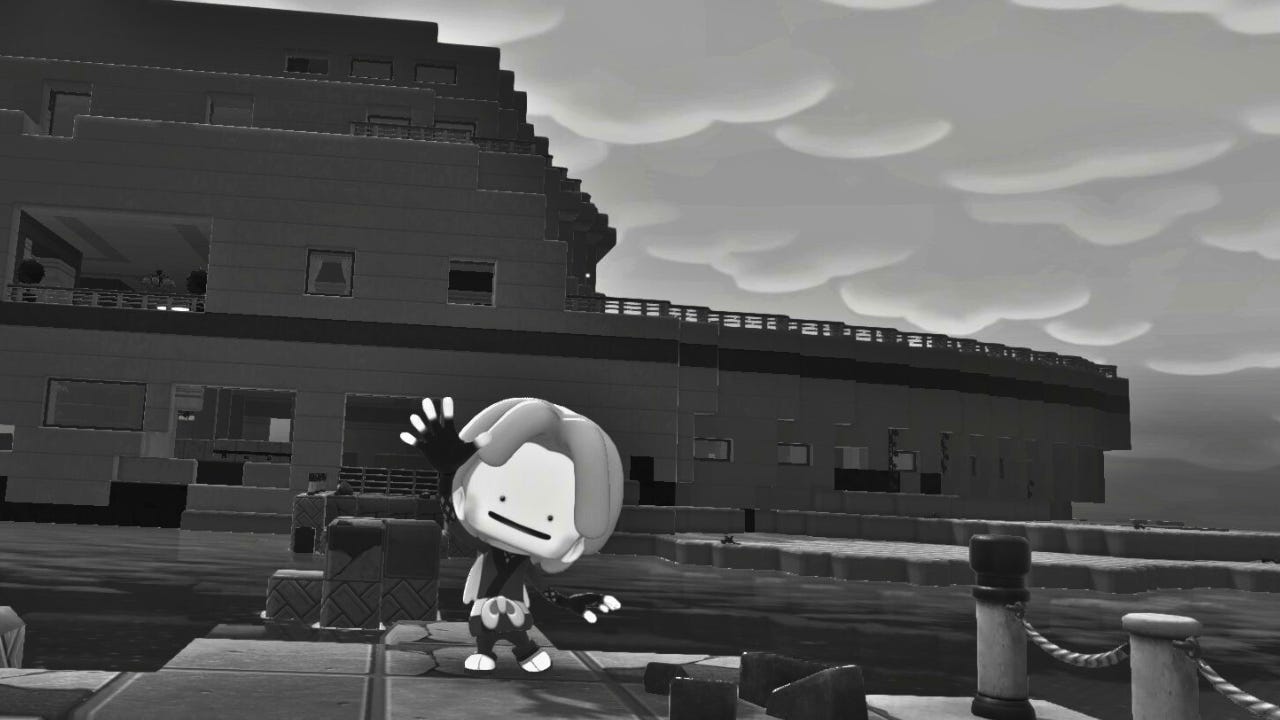
You have a large following online. People follow you because you are an authority in the fandom. You have memorized background information. You can identify a reference on sight. You know the names of minor characters, unused assets, and obscure details from games released decades ago. When a new game appears, your boots are on the ground. Screenshots and clips get posted. Your audience watches because you can explain what everything means and tell them why this thing is so important faster than anyone else.
While promoting The Super Mario Galaxy Movie, Brie Larson said,
“When I watched the movie, it was almost just like this sensory overload of like everything I’ve ever loved and played and watched throughout my whole life. I just felt like bombarded by all the references, and every single frame is just filled with references.”
In Pokémon fandom, there is Joe Merrick.
Merrick runs Serebii.net, one of the largest Pokémon fan sites in the world. When a new game releases, the expectation is that the site will catalog everything as quickly as possible. The race is to know first. Serebii knows first.
A recent profile fawns over him, describing him as “more dedicated than you will ever be.” The evidence is simple. He has skipped life events and parties when Pokémon news might drop. He checks for updates when he wakes up. And he will argue with anyone online when it comes to being correct about information surrounding Pokémon and its associated companies.
A few days after Pokémon Pokopia launched, he posted on Twitter:
“And that’s credits for Pokémon Pokopia after almost 30 hours of gameplay
Absolute masterpiece of a game. GAME FREAK, Koei Tecmo and TPC did an amazing job with this one. It bodes well for future Pokémon games.”
This is the ultimate Pokémon fan. It would be ridiculous to suggest anyone understands Pokémon better than him. You can find the answer to any question on Serebii dot net.
This is what it means, now, to “understand” a game. Because once a text becomes something to be cataloged, there is no longer any room to encounter it. Only to extract from it. The game stops being a place you move through and becomes a container of information to be emptied.
In Against Interpretation, Susan Sontag describes a mode of criticism that treats art as something to be translated into a set of meanings that can be extracted and explained, and she argues that this does not deepen our engagement with a work so much as replace the experience of it with a method for handling it. “To interpret is to impoverish, to deplete the world—in order to set up a shadow world of ‘meanings.’”
What she names here is an approach to art that prioritizes what can be said about it over what it feels like to be inside it. In games, that shift is everywhere: a Pokémon becomes a set of stats, a battle becomes a question of optimization, a story moment becomes sanded down into what it is “really about.” Each of these translations produces something simple that can circulate cleanly online, but in doing so it strips away the conditions under which the work might be encountered as alive.
Understanding, in this sense, forecloses experience. It gives you the answer in advance.
This is the lore master.
I arrive in a new area. What is Bleak Beach? Who should I talk to? What key items should I be sure not to miss?
The place itself is a long gray stretch of shore where weeds the color of bruises push up through rusted metal and broken concrete. Wind moves through the tall grass with a dry whisper, the sound of rummaging through old papers. Buildings sit half-eaten by the earth. A stairway leads nowhere. The world here tried very hard to become something else and failed.
And here, I am a Ditto pretending to be human.
The hands I wear are approximations and my feet are guesses. When the grass grows too high I reshape my arms into long flat blades and sweep them through the weeds, the stems giving way with a soft fibrous sigh. The land opens up in small clearings wherever I pass. Greener than it was before, surely.
Slowly, I organize. A planter moves two steps left. A bench slides back against a wall. A row of flowers forms a line along the path. The world begins to settle into squares that make sense to the human picture in my mind—little Tetris blocks of order snapping together across the beach. A place I might recognize as home.
The islands in Pokopia have been abandoned by humans. Only Pokémon remain. And yet the work continues. As if the next boat might appear any moment on the horizon. As if a human might step onto the dock and say, yes, this is exactly how I left it.
So, I trim the grass a little closer. I straighten a crooked sign. Somewhere along the way it becomes clear what kind of creature I am in this place.
I am a dog waiting for my owner to come home.
A note appears one day tangled in the branches of a tree that has forgotten how to grow leaves. The paper is thin and stiff with age.
“We managed to track down the renowned Kenzo, owner of the largest building in the area, for a special interview! ‘My family has dreamed of constructing a building here for generations,’ said a tearful Kenzo, with Machamp by his side. Machamp had also helped with the construction.”
A family dreaming of a building for generations. A Machamp lifting beams into place. Pride in the weight of stone and steel. The sense that if something large enough were built here it might anchor the future in place.
The beach has swallowed the building now. The dream inherited by the weeds.
Still, I move the benches and cut the grass and build small homes with small kitchens and narrow bedrooms and place the beds where beds are supposed to go, where our beds once were, or something close enough to pretend, and I straighten the tables and clear the counters and make the rooms presentable in case anyone should arrive, in case someone remembers the way back, in case the shape of things is enough to call them home again, in case.
I arrange the world into shapes that might be legible to someone who has abandoned me.
I wait for it: the impossible sound—the quick patter of shoes in the entryway, the turn of a doorknob that has not been touched in years. I wait like something trained to wait.
I am my own dog.
It is difficult to say where these feelings fit within the structures that dominate how we talk about games online.
Wikis cannot host this kind of experience, because it cannot be extracted into memorized trivia. YouTube essays, meanwhile, tend to organize themselves around creators presenting their playthroughs as correct accounts of what the game is, which leaves little room to dwell on something this private without breaking the illusion that the insight is obvious, something the audience has arrived at on its own—or worse, inviting the familiar correction that it “isn’t that deep.”
The note about Kenzo, for example, becomes valuable exclusively because of what it can be made to connect to elsewhere. It is pulled out of the place you find it and repositioned as an answer to a long-standing question from another game: the man in Vermilion City, standing beside a Machop, building something whose purpose was never explained.
Now, finally, we know the answer!
He was building a building.
A viral post celebrated this factoid as the resolution of this Pokémon mystery:
“Pokopia just casually solved a 30-YEAR-OLD POKÉMON MYSTERY!!!
It’s a very small worldbuilding detail that won’t matter much to many people, but is a lore drop I have been waiting for since I was 6 years old 😭😭😭”
In the accompanying video, the creator shouts: “It’s here, my childhood dream! Chat, I am not kidding. This lore here. I’m so happy I could die!”
And what is striking is not just the intensity of the reaction (which, in addition to being good and fun, we can easily excuse for the sake of the performance culture that surrounds streaming), but the form the meaning has taken. The note has been converted into something that can be understood entirely out of context. You do not need to walk along Bleak Beach or notice the way the buildings collapse into the earth or feel the strange compulsion to restore the world to order. In fact, playing the game only gets in the way of this kind of understanding, because it introduces too much that cannot be easily extracted.
What matters is that two points can now be connected across time: the man, the Machop, the building. A piece of information has been secured and the loop is now closed.
And so the note ceases to function as a fragment of a lost place, or as a trace of a dream that failed and was absorbed back into the landscape, and becomes instead a solution that completes something outside of itself. The building and the note are no longer something you encounter; they are facts you know.
This is not a quirk of one post or one overexcited reaction. It is a way of seeing that has become so familiar it rarely registers as a choice. Once a game is understood primarily as a collection of answers, everything inside it begins to reorganize itself around that assumption.
You can watch this happen in how people talk about Pokémon FireRed and LeafGreen, where years of discussion have hardened into a set of conclusions that feel self-evident.
Psyduck, my favorite Pokémon, is often completely misunderstood. It “should” be Water/Psychic, people say! It already has psychic moves and that typing would provide an attack bonus on those moves. Psyduck is then evaluated as a set of outputs that fail to align cleanly, but what people miss is that Psyduck’s entire character is built on that misalignment. Its psychic powers arrive as headaches and brief flashes it cannot sustain. To formalize those powers into its typing is to resolve the tension that defines it, to turn a creature shaped by instability into one that functions correctly. The perceived error only appears once the Pokémon is treated as something that ought to succeed on command in a player-imagined meta context.
A similar logic governs how Gengar is discussed under the physical/special split in Generation III. Because Ghost-type moves are physical and Gengar’s strengths lie in Special Attack, it is often framed as mismatched, another case of design working against itself! But this judgment begins from the assumption that the system exists to maximize offensive output. In that frame, anything that does not convert cleanly into damage appears deficient. What falls out of view is that Ghost, here, is defined more by what it avoids. Immunities to Normal and Fighting. Gengar does not fail to meet an intended role; it occupies a different one, structured around absence rather than excessive force.
Even the broader shape of the game becomes difficult to perceive once everything is filtered through the search for answers. A walkthrough can tell you exactly when you receive Surf, but it cannot account for the form those steps take. Surf is earned after conquering a maze that punishes excess movement by returning you to the start. By the time you emerge, you have proven your skill in traversing the land. Access to the sea then builds on that learning with a new scale, a release that feels proportionate to the constraint that preceded it.
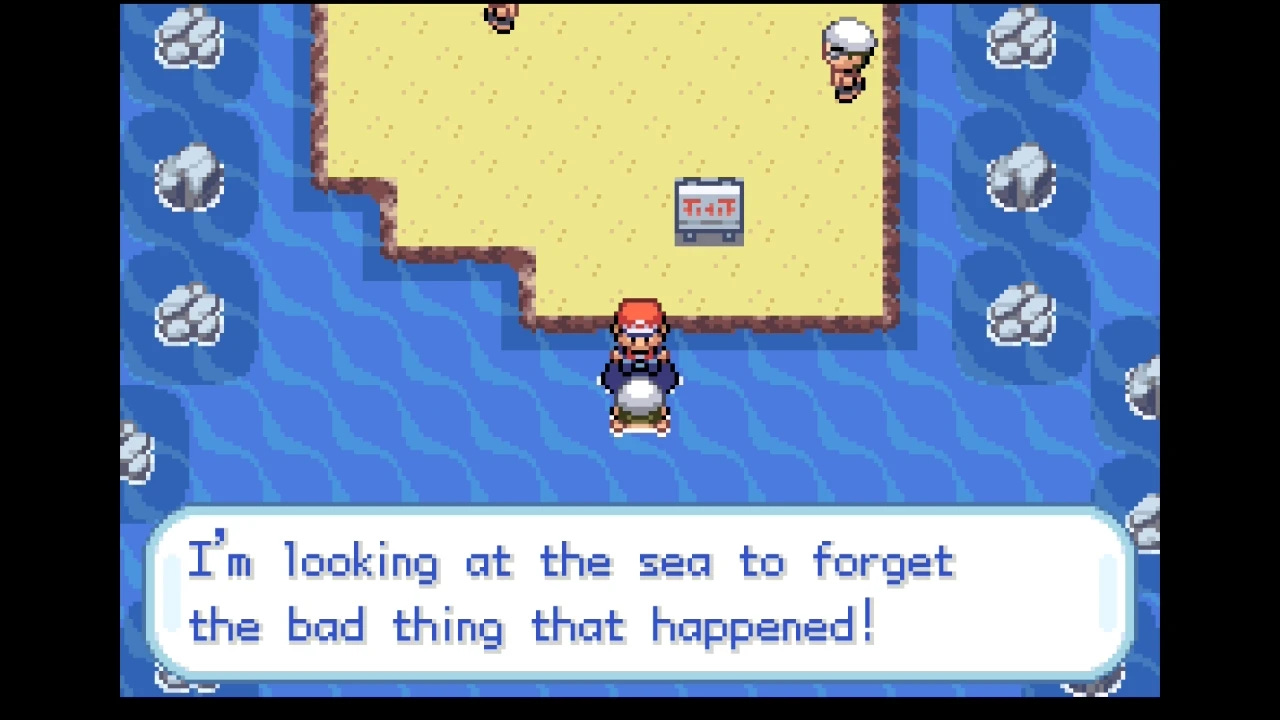
Once the question becomes how do I get Surf, that structure disappears. The answer takes its place, and with it the sense that what mattered has already been captured.
But the process does not end there. Once a game has been converted into a series of answers, the demand for answers begins to escalate. It is no longer enough to know where something is or how it works. The search extends outward, into developer interviews, behind-the-scenes material, and even unreleased or datamined information, as though the work itself were no longer sufficient to sustain attention.
What begins as curiosity hardens into a strict appetite.
Shigeru Miyamoto describes a similar movement when he talks about the pursuit of hidden secrets in games. “When pornography escalates, it eventually crosses into the grotesque,” he says. “It’s reached a point where it isn’t measured by common sense anymore. It’s just people getting bored and looking for stronger and stronger stimulation. We’ve hit a wall.” The comparison describes a process in which repetition dulls sensation and creators are left searching for something that will still register. Escalation becomes the only available move, and the work reorganizes itself around whatever can still feel like discovery.
The long tail of the “tera leak” makes this visible: years of unearthed “secrets” delivered in advance, each one smaller than the last, each one confirming that there is less and less left to encounter.
A small detail is no longer enough. It must resolve something longstanding, connect across decades, close a loop that has remained open. The Kenzo note cannot remain a fragment, a trace, a small and fragile piece of a larger mood. It must become an answer that can be declared.
And so the experience of the game is reorganized around that demand. Not what is here, but what can be extracted from it. Not what it feels like to move through a place, but what can be said about it once you leave. At a certain point, there is nowhere left to go. This is the wall Miyamoto is describing—the loss of the ability to encounter art.
Susan Sontag names the alternative more directly. “What is important now is to recover our senses. We must learn to see more, to hear more, to feel more.” The problem is not that we have failed to understand these works, but that we have understood them too quickly, too completely, in ways that leave nothing behind.
“Our task is not to find the maximum amount of content in a work of art, much less to squeeze more content out of the work than is already there.” The instinct to extract and solve every mystery prevents the work from appearing at all. “Our task is to cut back content so that we can see the thing at all.”
To play differently would mean allowing a moment to retain its integrity. To walk along Bleak Beach without asking what it refers to. To read the note and leave it where it is. To accept that not everything is pointing somewhere else. Let the building stay buried.
“The function of criticism,” Sontag writes, “should be to show how it is what it is, even that it is what it is, rather than to show what it means.”
Can the lore master give this up? Is it possible?
“In place of a hermeneutics,” she writes, “we need an erotics of art.”
An attention that does not immediately convert what it finds into a shareable clip, but stays with a work long enough for it to press back, to reveal something new on return.
The lore master cannot do this. He already knows too much.
Thanks for reading all that.
"I am a dog waiting for my owner to come home." -- this got me misty-eyed. A wiki plot summary can't compare.
I like this article, but at the same time, I am probably more of a 'lore master' than a lot of players. I love immersing myself in a story and a world, and a core part of the fun in games for me comes from exploring and learning more about the world, especially if there are enough nuggets of information that it feels worthwhile doing so.
It's just.. how I engage with games, I suppose. The search for information on the setting, the chasing of mysteries, regardless of whether answers actually exist or are just seeds that may or may not become something in the future (though I dramatically prefer something presented as a mystery to actually have a resolution). I never expected that building to have any follow-up, but I think it's cool from a meta perspective that it did. Honestly, I had little interest in Pokopia (at least not enough to want to get it) until learning about all the references, and now it has my curiosity and attention.
Several of my favourite franchises are long-running and filled with background/tangential information that promotes communities making theories and discussing the information and what it could all mean, what it could lead to in the future, and explaining inconsistencies in a way that is consistent with what we know, and that enriches the experience of the game for me. I'm always a little conflicted when I hear the term 'reddit game', I'm not sure I fully understand the phrase, but I'm less interested in being told by another person "here is what the story is" and more "here is how I interpreted the story" and to engage with them about how our interpretations differ or align. It makes the game bigger to me than just The Game.
I guess that's more about my experiences with the experience of a game, rather than with the game itself, though?